
FDA Adds Rare Eye-Risk Warning to GLP-1 Drugs Including Ozempic and Wegovy
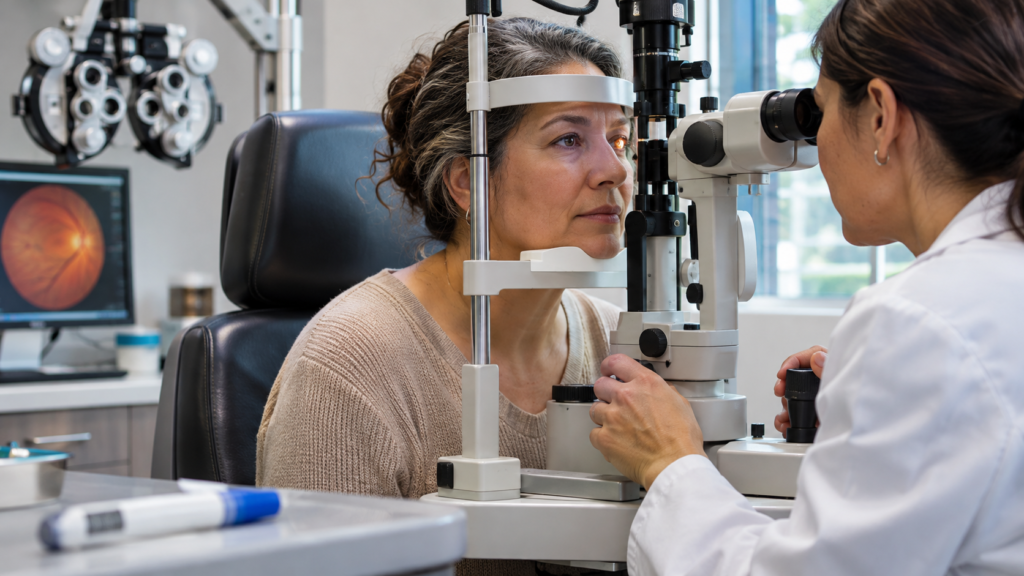
The U.S. Food and Drug Administration on Nov. 9 required manufacturers of GLP-1 medicines to add a warning about a potential increased risk of a rare eye condition that can cause sudden, painless vision loss. The update covers products including Ozempic, Wegovy, Mounjaro and Zepbound, and applies across the drug class rather than only to medicines prescribed for weight loss.
The condition is non-arteritic anterior ischemic optic neuropathy, or NAION. It involves reduced blood flow to the optic nerve and can lead to permanent vision loss in one eye. The FDA describes the association as a potential risk; its review does not establish that the medicines cause NAION.
What the FDA found about NAION and GLP-1 drugs
The FDA reviewed clinical-trial, observational, animal and postmarketing evidence. In a meta-analysis of 126 randomized trials, the agency identified 15 probable NAION cases: 10 among people taking GLP-1 receptor agonists and five among comparator groups. The corresponding rates were 6.4 and 3.8 cases per 100,000 person-years.
Those numbers show the event was uncommon in the trial data, and the small number of cases limits what researchers can conclude. The FDA also reviewed real-world records and published studies; it said the evidence supported a potential increased risk, while noting that NAION’s risk factors overlap with conditions common among people treated with these medicines. The agency’s action is a safety-label update, not a finding that every patient faces the same risk.
Which medicines are covered and what patients should know
The FDA’s list includes semaglutide products Ozempic, Wegovy and Rybelsus, as well as tirzepatide products Mounjaro and Zepbound and other medicines in the class. The drugs have different approved uses, which can include type 2 diabetes, weight management and other conditions depending on the product.
FDA-listed symptoms include sudden, painless vision loss in one eye, blurred or missing areas of vision, distorted colors, and hazy or reduced central vision. The agency advises patients to contact a health professional right away if these symptoms occur. People who have had NAION should discuss whether to continue or stop a GLP-1 medicine with their health professional.
The announcement adds an important safety consideration to a class with multiple uses and benefits. Globuzz recently covered a separate study linking GLP-1 medicines with lower progression to Type 2 diabetes among adults with prediabetes; that preliminary observational finding does not resolve the FDA’s safety review or replace individualized medical advice.
Sources
FDA Drug Safety Communication, Nov. 9, 2026 · Associated Press report · Reuters report (via MarketScreener)
