
Spain’s First General Strike in 14 Years Puts Housing Costs at Center of Election Debate
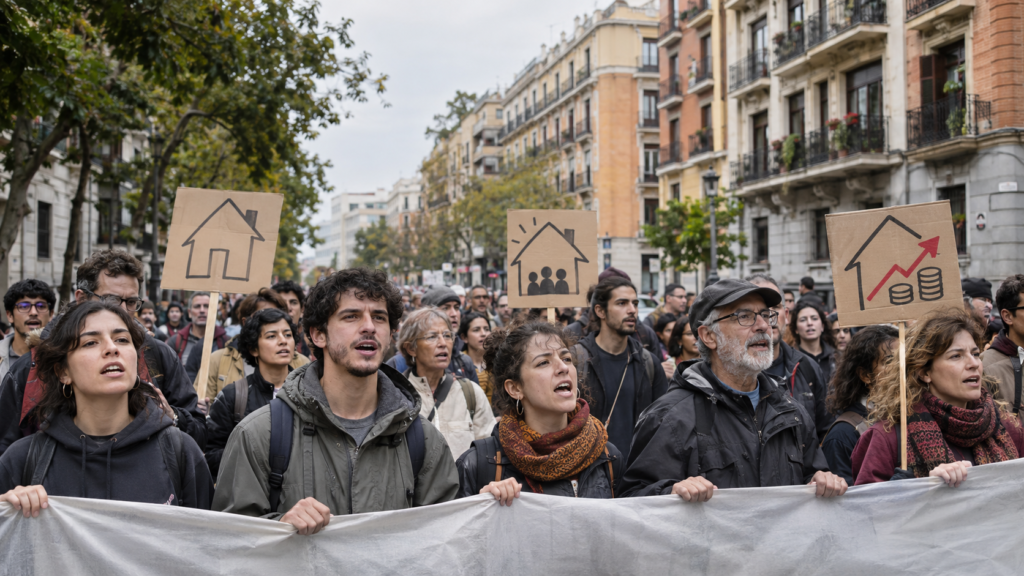
AI-generated editorial illustration.
Spain’s first general strike in 14 years put housing affordability at the center of a nationwide protest on Wednesday, Nov. 11. Work stoppages disrupted public transport and businesses as unions and tenant groups called for action on rents and evictions ahead of the country’s Nov. 29 election.
The walkout was the first general strike since 2012 and the first whose main organizing push grew out of housing protests, according to the Associated Press. Its scale was disputed: unions said roughly 4 million workers took part, while business groups described participation as low in many sectors. Reporting from Barcelona and Madrid showed disruption in transport and heavy industry, alongside shops and smaller businesses that remained open.
Housing costs became the strike’s central demand
Organizers framed the protest around wages, housing and prices. Tenant advocates want stronger protections and measures to curb speculation, while the unions linked stagnant pay to the difficulty of finding affordable homes. The strike followed weeks of demonstrations and a parliamentary rejection of government measures aimed at limiting evictions and rent pressure, Reuters reported.
The housing crunch is substantial: Reuters cited Spain’s central bank estimate of a 750,000-home shortfall, projected to top one million by 2028. The national election is scheduled for Nov. 29, giving the dispute immediate political significance. The strike’s organizing coalition and focus make it a notable test of how housing costs can move from street protests into labor action and election debate.
Turnout claims differed across sectors
The 4 million participation figure came from unions and should be read as their estimate, not a confirmed count. Reuters reported that police had recorded at least 73 arrests linked to strike incidents by 2100 GMT, while union officials reported especially strong stoppages in ports and auto plants. The AP found participation varied: transport and heavy industry were more affected, while retail and restaurants saw less disruption. Spain’s main business lobby also challenged the unions’ assessment of the walkout’s reach.
That variation matters when assessing the strike’s political weight. A nationwide day of action can send a visible message without producing uniform work stoppages or a single agreed turnout total. The Nov. 29 vote will show whether housing stays a leading campaign issue after the demonstrations and strike have ended.
Sources: Associated Press; Reuters (republished by Euronext). More coverage: The Globuzz Politics.
