
India Targets 900 GW of Non-Fossil Power by 2035 as Grid Needs Grow
India’s goal of reaching 900 gigawatts (GW) of non-fossil electricity capacity by 2035 would nearly triple the 308 GW recorded in July 2026. The scale of the target puts transmission and energy storage at the center of the country’s clean-power expansion: renewable projects need a way to move electricity to users and balance supply when wind or sunlight is unavailable.
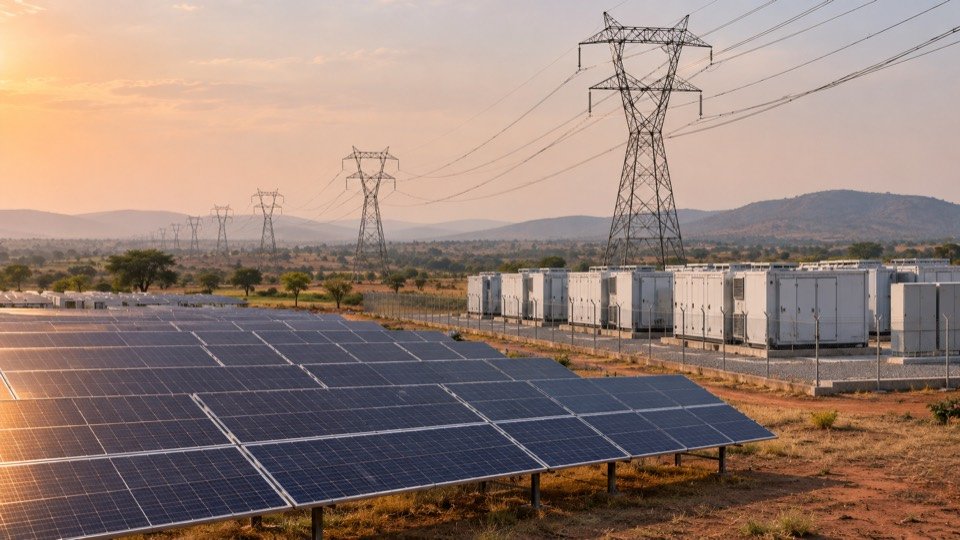
The 2035 target starts from a 308 GW base
India’s Ministry of New and Renewable Energy reported 308 GW of installed non-fossil capacity as of July 31, 2026. The government says non-fossil sources made up about 55% of installed power capacity by October. Installed capacity measures the maximum output equipment can produce under suitable conditions; it does not mean that the same share of electricity is generated at every moment.
That distinction matters for a system adding solar and wind. Output varies with weather and time of day, while electricity demand and the location of generation do not always line up. A larger fleet of renewable plants therefore needs transmission lines, storage and other grid operations capable of carrying power where it is needed.
A corridor plan pairs transmission with batteries
The government’s Green Energy Corridor III plan is designed to provide transmission capacity to evacuate 135 GW of renewable electricity across states. The plan also includes 50 gigawatt-hours of battery storage. Its stated total outlay is ₹1,86,405 crore, with implementation targeted through the 2032–33 financial year.
The corridor is infrastructure for moving electricity from renewable-resource areas into the wider grid; storage can shift some supply to later hours. These projects are planned support for the 2035 goal, not proof that the target has already been achieved. Construction, connections and reliable operation will determine how much new capacity can contribute to the power supply.
Why grid delivery is part of the clean-power story
Associated Press reported that non-fossil sources supplied roughly one-third of India’s electricity in the three months before its Nov. 14 report, even though they represented about 55% of installed capacity. The gap illustrates why capacity announcements alone do not show how much clean electricity reaches consumers. AP also described renewable curtailment when the grid cannot take available output.
India’s published corridor plan gives a measurable infrastructure pathway alongside the headline target: 135 GW of transmission capacity and 50 GWh of storage by the plan’s stated timeline. The country’s next progress will depend on delivering those systems as well as adding generation. The Globuzz has also covered the broader COP31 electrification debate and calls for mining safeguards, a related part of the global transition.
Sources
Sources: Associated Press, Nov. 14, 2026; India Press Information Bureau, Green Energy Corridor III; India Press Information Bureau, renewable-energy capacity backgrounder.
