
ULA Vulcan Rocket Failure Leaves 40 Amazon Leo Satellites Lost
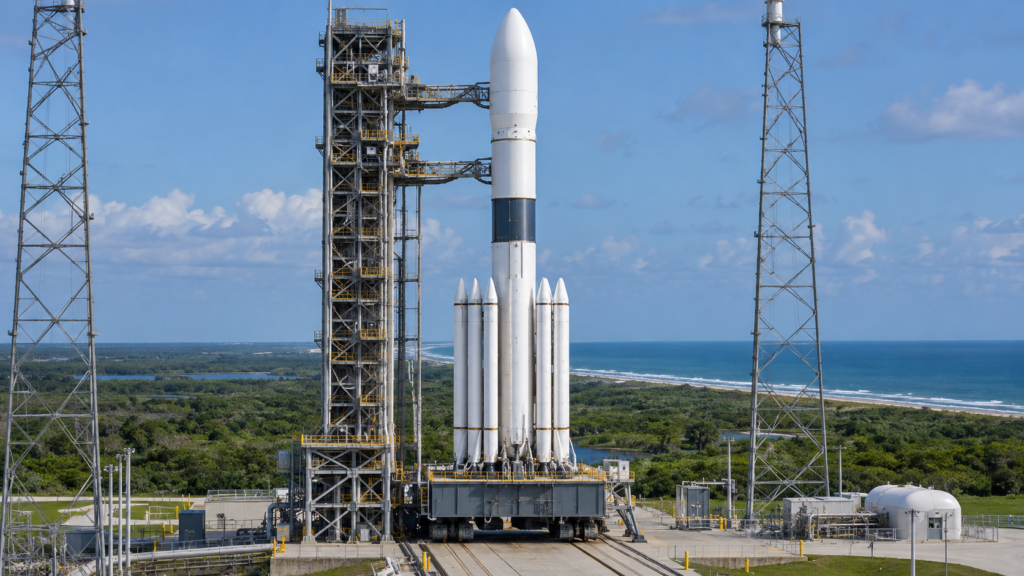
The ULA Vulcan rocket failed to deliver its Amazon Leo payload to orbit Sunday, Nov. 15, after suffering an in-flight anomaly about 10 minutes after liftoff from Cape Canaveral, according to United Launch Alliance and reporting by Reuters and CBS News. The 40 satellites aboard were lost, and the cause has not been announced.
What ULA says happened
ULA said data received by its launch director confirmed that the rocket suffered an anomaly during flight and did not deliver the Amazon mission to orbit. The company said it would investigate the cause and determine corrective action before returning the vehicle to flight. No timeline for that process was given.
The failure occurred on the first Vulcan launch carrying Amazon Leo satellites. Amazon had said the mission would carry 40 spacecraft, its largest Leo payload delivered on one launch to that point. Reuters reported the payload was lost; CBS News quoted ULA’s confirmation that the mission failed to reach orbit.
Why the mission matters
Amazon Leo is the company’s planned low-Earth-orbit broadband network. Losing a full satellite batch delays the deployment of those spacecraft, while the investigation may affect ULA’s upcoming Vulcan flights. The scale of any schedule impact is not yet clear.
The incident is also a major setback for ULA: Reuters and CBS described it as the company’s first full mission failure since its formation in 2006. Investigators have not publicly identified what went wrong, so the launch does not yet point to a specific design or operational cause.
Amazon’s pre-launch mission announcement described LV-01 as its first Leo flight on Vulcan. The company and ULA have not announced a new launch date for the affected mission.
Sources
Reuters: U.S. rocket fails after launch, payload of Amazon internet satellites destroyed
CBS News: ULA loses Vulcan rocket and 40 Amazon Leo internet satellites in launch mishap
