
PFAS Levels Fell in England’s Rivers, but Pollution Remains Widespread
PFAS levels in England’s rivers declined over the past decade, with concentrations of two well-known “forever chemicals” — PFOS and PFOA — down about 30% and 29%, respectively, from 2016 to 2025. The new Environment Agency assessment also found PFOS levels in freshwater fish fell by about 49%, while warning that PFAS pollution remains widespread.
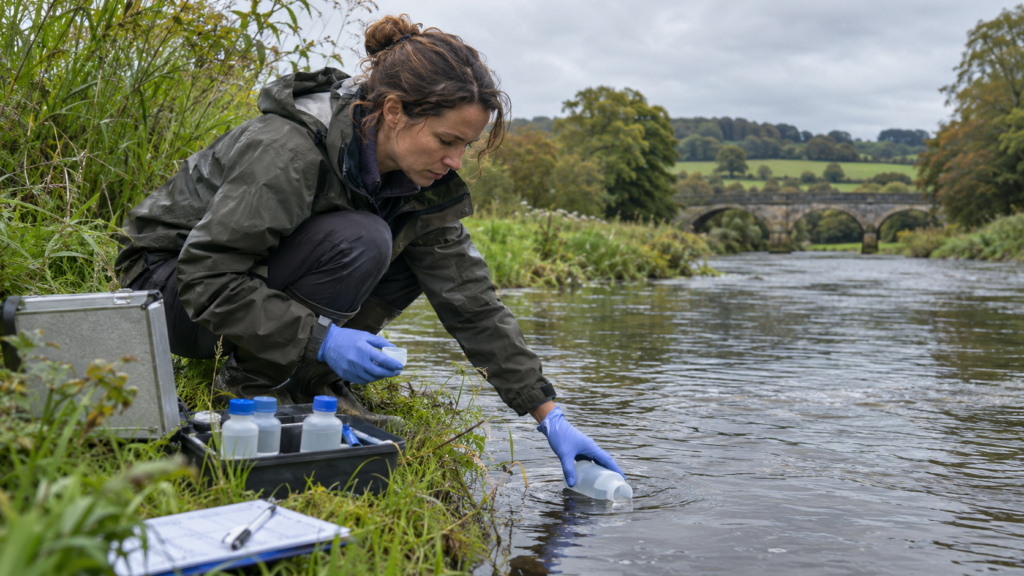
AI-generated editorial illustration.
What the Environment Agency report found
The Environment Agency’s assessment, published Nov. 12, compares monitoring results from 2016 through 2025. It reports declines in two legacy PFAS compounds in rivers — PFOS by around 30% and PFOA by 29% — and a roughly 49% fall in PFOS concentrations measured in freshwater fish. The agency says restrictions on PFOS and PFOA and targeted action have contributed to the reductions.
The government’s summary says the updated assessment draws on a larger body of environmental data and newer monitoring methods than its 2021 report. It covers PFAS in rivers, lakes, groundwater, estuaries, coastal waters and landfill leachate, including newer substances and chemicals that can break down into PFAS of concern.
Why lower PFOS and PFOA readings do not end the PFAS problem
PFAS refers to a large family of chemicals used in products and industrial processes. The latest declines concern PFOS and PFOA, two specific compounds; they should not be read as evidence that every PFAS chemical is falling or has disappeared. The Environment Agency says PFAS remains widespread because of historic use and continuing releases from some sources.
The distinction matters for interpreting the headline figures: a measurable improvement in legacy compounds can coexist with persistent contamination and a need to monitor a wider range of substances. The agency says its expanded evidence base is intended to help identify sources and guide future regulatory and operational decisions.
What happens next
The findings will inform the UK’s PFAS Plan, which sets out work to improve monitoring, understand how the chemicals spread and reduce exposure. The government also lists future work on possible restrictions for PFAS in firefighting foams and research into water thresholds and potential replacements. These are planned or ongoing measures, not evidence that all PFAS releases have stopped.
Readers can follow more health and chemical-safety coverage from The Globuzz.
Sources
Sources: BBC News: Significant drop in levels of toxic ‘forever’ chemicals in England’s rivers; Environment Agency and Defra: New report shows progress in cutting levels of ‘forever chemicals’ in England’s rivers; Environment Agency: PFAS sources, pathways and environmental data (2026).
